
GO EGYPT | Cairo - Oasis - Luxor - Aswan 15 days
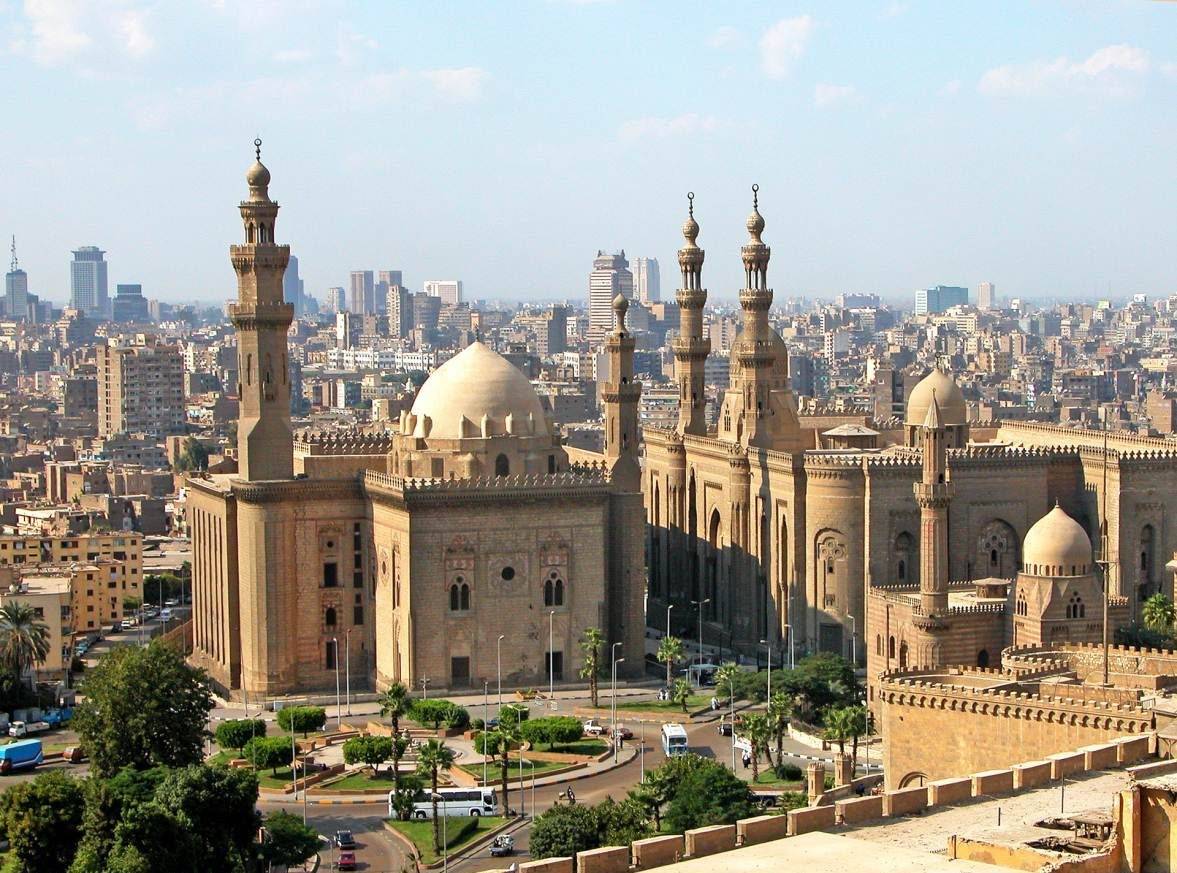
Description
GO EGYPT | Cairo - Oasis - Luxor - Aswan 15 days
What's included
INCLUDED
- Pick up and drop off to the airport.
- All excursions with private high qualified tour guides.
- Hotel Accommodations by BB (Bed & Breakfast)
- All sightseeing tours as mentioned in the itinerary.
- Entrance tickets to all the sightseeing, mentioned in program.
- All transfers by a modern air-conditioned deluxe vehicle.
EXCLUDED
- International Airfare.
- Entry visa to Egypt.
- Any optional tours
- Tipping.
Itinerary
DAY 01: Arrival at Cairo airport, meet and assist through formalities transfer to the hotel for overnight.
DAY 02: After breakfast drive to Memphis at the edge of the western desert, the capital of the ancient kingdom, and one of the most important monuments throughout the history of ancient Egypt, from here we drive to Sakkara the vast necropolis of ancient Memphis. Visit the Step Pyramid of Zoser (3rd dynasty, 2668 BC – 2649 BC).In the afternoon, drive to the Pyramids of Giza. Cheops Pyramid, the largest of the three, was built in the 4th dynasty about 2690 BC,. One of the seven wonders of the ancient world .In front of the pyramid of Chephren, there stands the Sphinx a lion with a Pharaoh’s head thought to be a portrait of the pharaoh Chephren, Transfer back to your hotel for dinner and overnight.
"Memphis, was the ancient capital of Aneb-Hetch, the first nome of Lower Egypt. Its ruins are located near the town of Helwan, south of Cairo. According to legend related by Manetho, the city was founded by the pharaoh Menes around 3000 BC. Capital of Egypt during the Old Kingdom, it remained an important city throughout ancient Mediterranean history. It occupied a strategic position at the mouth of the Nile delta, and was home to feverish activity. Its principal port, Peru-refer, harboured a high density of workshops, factories, and warehouses that distributed food and merchandise throughout the ancient kingdom. During its golden age, Memphis thrived as a regional centre for commerce, trade, and religion."
"Pyramid of Zosar, Pharaoh Zosar was the first king of the Third Dynasty. The serdab, on the northern face of the pyramid, contained his statue; this was the place of his "ka," which could see the offerings made to him. The original statue, now in the Cairo Museum, is thought to have recorded his exact features. This pyramid and the buildings comprising the funerary complex were designed by Imhotep, the first architect whose name is recorded. They were also the first major constructions in stone. Prior to this, sun-dried brick had been the usual building material. It is also the first tomb of monumental size. It was begun as a large mastaba, oriented to the points of the compass, but was enlarged twice to a final height of about 200 feet."
"Pyramids of Giza, There are no more famous ancient sites within Egypt or for that matter elsewhere in the world, than the Great Pyramids at Giza. They are, without question, the icon most associated with the Egypt. They have been both the main destination for tourists and a source of imaginative thought to the world for over three thousand years."
DAY 03: Leaving Cairo behind, we start a 350 km to Baharya Oasis. Upon arrival visit the temple of Alexander the great built during Alexander's lifetime and dedicated to Amun and Horus; in the afternoon, we explore the oasis which is surrounded by black hills made up of ferruginous quartzite and dolorite. Tombs of the nobles where Hundreds of mummies have already been excavated, and there are believed to be perhaps 10,000 in all, including nobles and kings. The cemetery dates to the GrecoRoman era, and is located very near Bawiti at the Bahariya Oasis, Some of the mummies found so far wore golden masks and had magnificent designs of ancient Egyptian gods on their chests indicate a mix of classic Roman and Egyptian styles. Overnight in Baharya.
"Baharia Oasis, The Bahareya Oasis is the northernmost oasis of Egypt. This oasis has particular historical significance as it was an important transit point for the Caravan tracks and the Nile Valley. This is besides being the theatre of great and important archeological finds in modern times.
DAY 04: Explore the Oasis, visit the English mountain Located on a flat hill top near Bawiti is a fortification built by one Captain Williams during WW I in order to keep up with comings and goings of Libyan Senussi tribesmen. Afternoon, drive to Farafra Oasis, Visiting the White desert, a vast area of desert has bolder shaped by the wind into huge Mushrooms shapes. Overnight in Farafra.
DAY 05: After breakfast, explore the ancient town, visit the Farafra museum, drive to Dakhla , Visit Balat, the old village Al-Qasr distinctive looking houses built in the Oasis style, continue to Dakhla for overnight.
"The Farafra, depression is the second biggest depression by size located in Western Egypt and the smallest by population, near latitude 27.06° North and longitude 27.97° East. It is located in the Western Desert of Egypt, approximately mid-way between Dakhla and Bahariya. Farafra has an estimated 5,000 inhabitants (2002) mainly living in the town of Farafra) and is mostly inhabited by the local Bedouins. Parts of the town have complete quarters of traditional architecture, simple, smooth, unadorned, all in mud colour. Local pride has also secured endeavours to secure local culture. Also located near Farafra are the hot springs at Bir Sitta and the ElMufid lake."
"The Dakhla Oasis, lies to the northwest of Kharga and is also about 310 km to the southeast of Farafra. This oasis consists of 14 settlements and has a population of about 70,000 people. Dakhla is the farthest oasis out of Cairo and is considered one of Egypt's most beautiful oases
DAY 06: Drive to Kharga, Visit Hibis temple then continues our tour to visit Bagwat cemetery, overnight.
"The Kharga Oasis, must be one of the most beautiful places in the world, especially at sunset; everything you see at this “green island in the middle of a yellow ocean of sand”, is natural! Whether you are sleeping under the stars, or just relaxing between the high palm-trees, you will find a feeling of integration with the environment."
DAY 07: Drive from Kharga to Luxor, arrival at Luxor, visit Focus on west bank of the Nile to visit the Valley of the Kings and Deir El-Bahari, Queen Hatshepsut’s monumental rock-cut temple. Stop for pictures at the two Clossi of Memnon guarding the valley overnight at hotel in Luxor.
"The Valley of the Kings, was the royal cemetery for 62 Pharaohs and is located on the west bank at Luxor. The only entrance to this place was a long narrow winding path. This was a secret place where sentries were placed at the entrance of the Valley as well as along the top of the hills in the hopes of discouraging tomb robbers, who had in the past plundered all royal tombs, including the treasures of the Pyramids. Some thefts were probably carefully planned, but others were spur of the moment, as when an earlier tomb was accidentally discovered while cutting a new one and workmen took advantage of the opportunity."
"Hatshepsut, was one of the most interesting female figures and most capable Pharohs of Egyptian history (1490-1468 BC), so our visit to her 3,500 year old mortual temple in the Valley of Kings (Thebes West) was in many respects a quite special experience.
DAY 08: (Nile cruise), Embarkation on ship. Visit the stunning monuments of Luxor and Karnak, the greatest cities of Ancient Egypt. Overnight on the ship. All meals include.
"The Temple of Luxor, is among the most beautiful Temples in Egypt. It was known in the New Kingdom period as Ipt-Rsyt, which means the southern shrine. This was to differentiate between this Temple and Karnak Temple, which was the northern house of Amon Ra. Amenhotep III built Luxor Temple. The architect and overseer of the works of construction was the genius Amenhotep, son of Habu. The Temple run close and parallel to the river Nile from north to south. It was constructed on the site of a small Temple of Amon, built by kings of the 12th dynasty. At the time of Amenhotep III the Temple was only 190m in length and 55m in width. Basically, Luxor Temple was consecrated to Amon Ra in his fertility aspect."
"The Temple of Karnak, is the largest Temple in the World! The complex contains a group of Temples such as the Great Temple of Amon Ra, the Temple of Khonso, the Ipt Temple, the Temple of Ptah, the Temple of Montho and the Temple of the God Osiris. A 20m high, mud brick enclosure wall, surrounded all of these buildings."
DAY 09: Free at leisure in Luxor. Sailing to Edfu .Overnight on the ship. All meals include.
DAY 10: Board horse-drawn carriages for a drive through Edfu to the temple of Horus with its menacing black stone statue of the Falcon god. Later, re-board your boat and sail to Kom Ombo to visit Sobek temple, then proceed sailing to Aswan. Overnight on the ship. All meals included.
DAY 11: After breakfast, enjoy an excursion to the Old Dam and the gigantic Aswan High Dam completed in 1970.Board a motor launch to the island of Philae to visit the temple of Isis. Also stop at the ancient granite quarries to see the famous Unfinished Obelisk. Overnight on the ship. All meals included.
"The High Dam of Aswan, is a great project. In fact it was one of the most important achievements in the last century in Egypt, even for many years it was a symbol of the New Era of the Revolution of 1952. It provided Egypt with water and electricity and secured the country of the risk of the destructive inundation. The Aswan High Dam was a great project! In fact it was one of the most important achievements of the last century in Egypt, for many years symbolizing the New Era of the Revolution of 1952. It provides Egypt with water and electricity, and secures the country from the risk of the destructive inundation of the River Nile."
"Philae Island, was a rocky island in the middle of the River Nile, south of Aswan. It was called in Hieroglyphic “Apo” which means Ivory. It was also known by the Greek “Elephantine”, most probably because it was an important centre of trade, especially for ivory The Ancient Egyptians built a beautiful and magnificent Temple on this island for the Goddess Isis, but the Temple became submerged after the first Aswan dam was built in 1906, and it was not until the seventies that many nations attempted to save the Temple."
"The Unfinished Obelisk, lies in its original location, in a granite quarry in Aswan. It is 42m in length and was most probably abandoned when some cracks appeared in the rock, during its construction had this obelisk been completed, it would have been the heaviest obelisk ever cut in Ancient Egypt, weighing nearly 1100 tons! It is believed that it was constructed and abandoned during the reign of Queen Hatshepsut (18th Dynasty). During the earliest ages, the Ancient Egyptians knew the so-called “Pn-pn”, which was a pyramidal stone with a pointed top and according to their beliefs the “Pn-pn” symbolized the primeval hill from which the world first appeared. Then, in the course of time, this Pn-pn evolved to be an obelisk usually made of granite with a pyramidal shape on top."
DAY 12: Disembarkation at Noon time, then transfer to your hotel in Aswan. (Optional tour to Abu Simbel temple). Back to Aswan. We'll be transferred to Aswan rail-way station to get the sleeping train to Cairo. Dinner on board.
Optional excursion to Abu Simbel
"The Temples of Abu Simbel, are amongst the most interesting Pharaonic Temples. Located close to the southern border with the Sudan, it is 280 km south of Aswan and consists of two, rock-cut Temples, which both date back to the reign of King Ramses II (1290- 1223 BC). Unfortunately these unique Temples suffered from the raising water of Lake Nasser while the High Dam was being built. Other countries, with the help of UNESCO, assisted Egypt to help save them the two Temples were cut in to many pieces, and then they were reconstructed again on a site 65m higher than the original location, and 200m back inland, to escape the rising water level. This great rescue operation began in June 1964 and finished in September 1968."
DAY 13: Breakfast on board, arrival at Giza rail way station. Star tour by visiting the Egyptian Museum, famous for its antiquities from Egypt’s Pharaonic period, dates back some 50 centuries, and includes the fabulous treasures of King Tut Ankh-Amon. Afternoon excursion to Old Cairo, the old Coptic churches, and the oldest Jewish Synagogue of Ben Ezra. Continue your visit to the Citadel of Salah El-Din and Mohamed Ali alabaster Mosque, followed by a visit to the medieval bazaars of Khan El Khalili, where you can bargain for your jewelry and hand –tooled leather items. Back to the hotel for dinner and overnight.
"The Egyptian Museum, owes its existence to the Egyptian Antiquities Service, established by the Egyptian government in 1835 to limit the looting of Egypt's priceless artifacts. The museum opened in 1858 with a collection assembled by Auguste Mariette, the French archaeologist retained by Ismail Pasha. It was originally housed in an annex of the palace of Ismail Pasha in Giza, the museum moved to its present location in 1900.
"The citadel, was constructed by Salah El Din on the Moqattam hills in 1183 AD overlooking the whole city to be his defensive point against the attacks of the Crusaders. Salah El Din appointed to be the governor of Egypt after the death of the Sultan of Damascus, Noor-el-Din. The mosque is situated in the Citadel of Cairo in Egypt and commissioned by Muhammad Ali Pasha between 1830 and 1848. Situated on the summit of the citadel, this Ottoman mosque, the largest to be built in the first half of the 19th century, is, with its animated silhouette and twin minarets, the most visible mosque in Cairo. The mosque was built in memory of Tusun Pasha, Muhammad Ali's oldest son, who died in 1816."
DAY 14: Drive to Alexandria, Visit the New Bibliotheque of Alexandria, and then continue to the Pompey’s huge red granite pillar and the intriguingly decorated Catacombs. Drive back to Cairo for dinner and overnight.
"Bibliotheque of Alexandria, Library of Alexandria was the largest and most significant great library of the ancient world. It flourished under the patronage of the Ptolemaic dynasty and functioned as a major center of scholarship from its construction in the 3rd century BC until the Roman conquest of Egypt in 30 BC.
"The Catacombs of Kom el Shoqafa, The Catacombs (meaning underground tunnels) lie in the district of Karmouz to the east of Alexandria. The area was called Kom El-Shouqafa or a pile of shards. The cemetery dates back to the 1st century A.D and was used until the 4th century A.D. It was discovered in 1900 when by pure chance, a donkey drawn cart fell into a pit, which led to the discovery. The Catacombs in Alexandria are so called because the design was very similar to the Christian Catacombs in Rome.
DAY 15: Transfer to Cairo int'l airport for final departure.